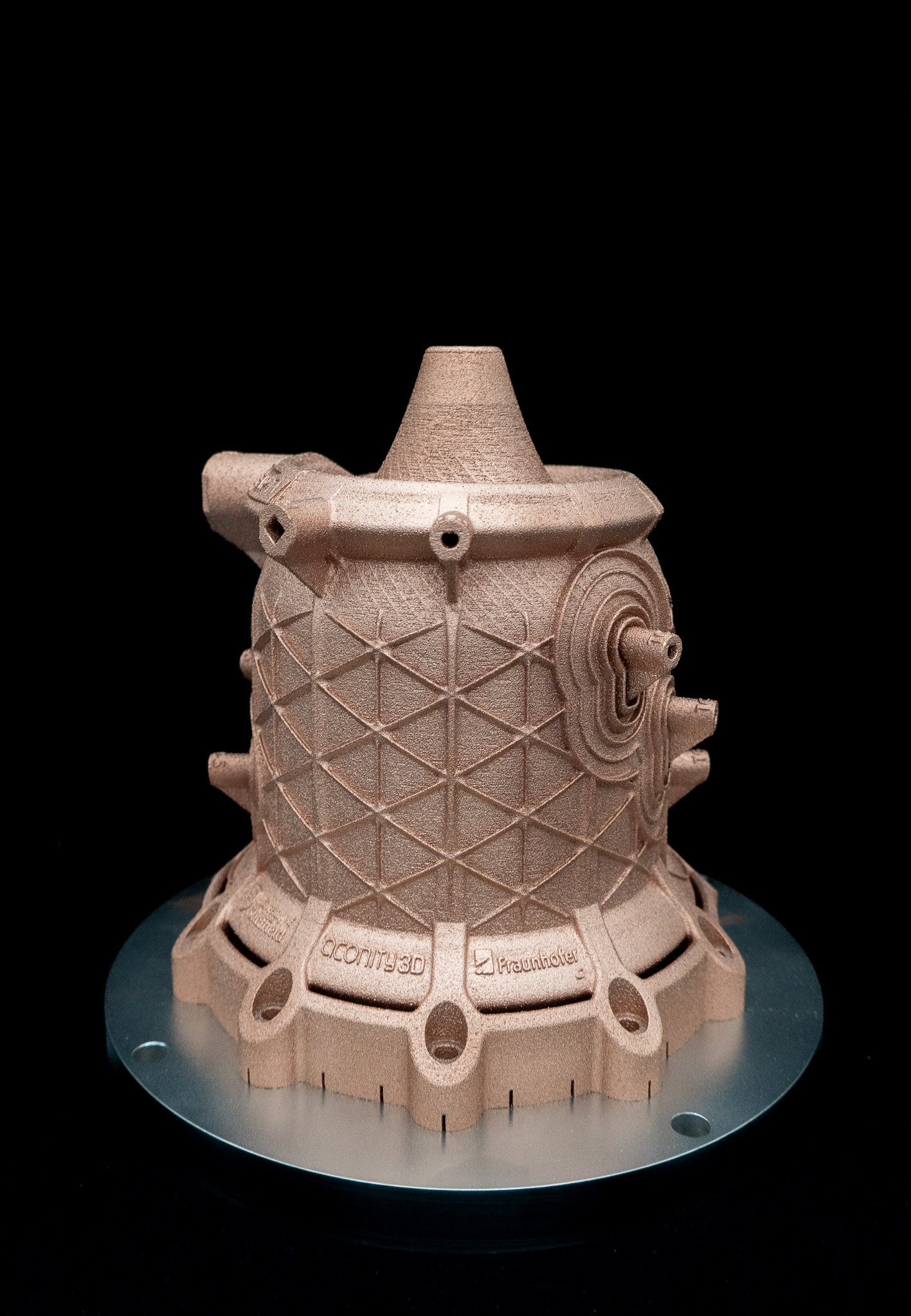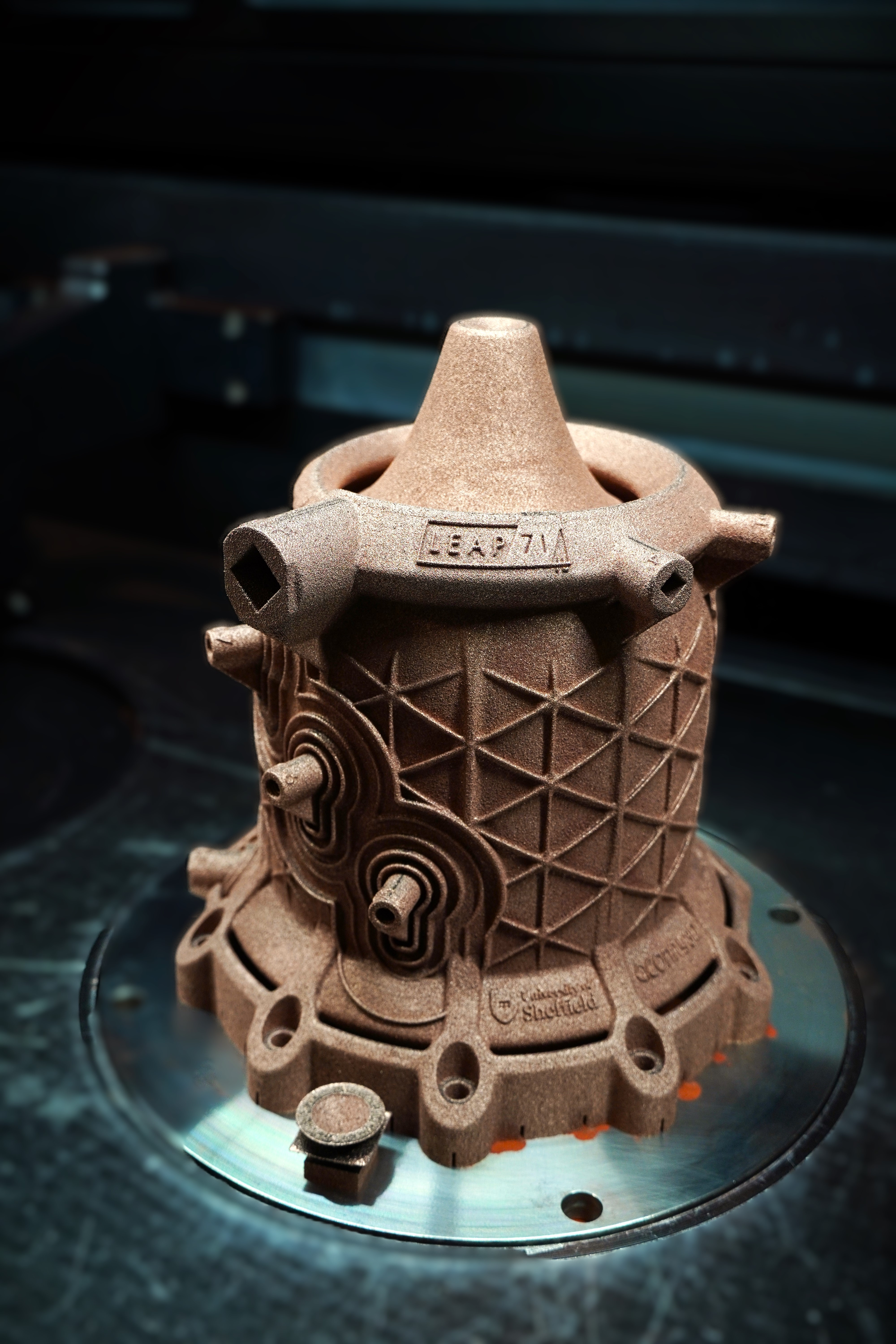
This rocket engine was not developed by humans” – YouTube video shows a propulsion system designed by LEAP 71’s AI Noyron and additively manufactured by Aconity3D
Designed by LEAP 71 and 3D-printed in CuCrZr by Aconity3D
How is a metal component created that can withstand extreme thermal loads—featuring integrated cooling channels, complex overhangs, and the highest surface quality requirements? This YouTube video demonstrates it using an aerospike engine as an example – designed by LEAP 71’s AI Noyron and additively manufactured by Aconity3D.
An engine that demonstrates the capabilities of metal additive manufacturing
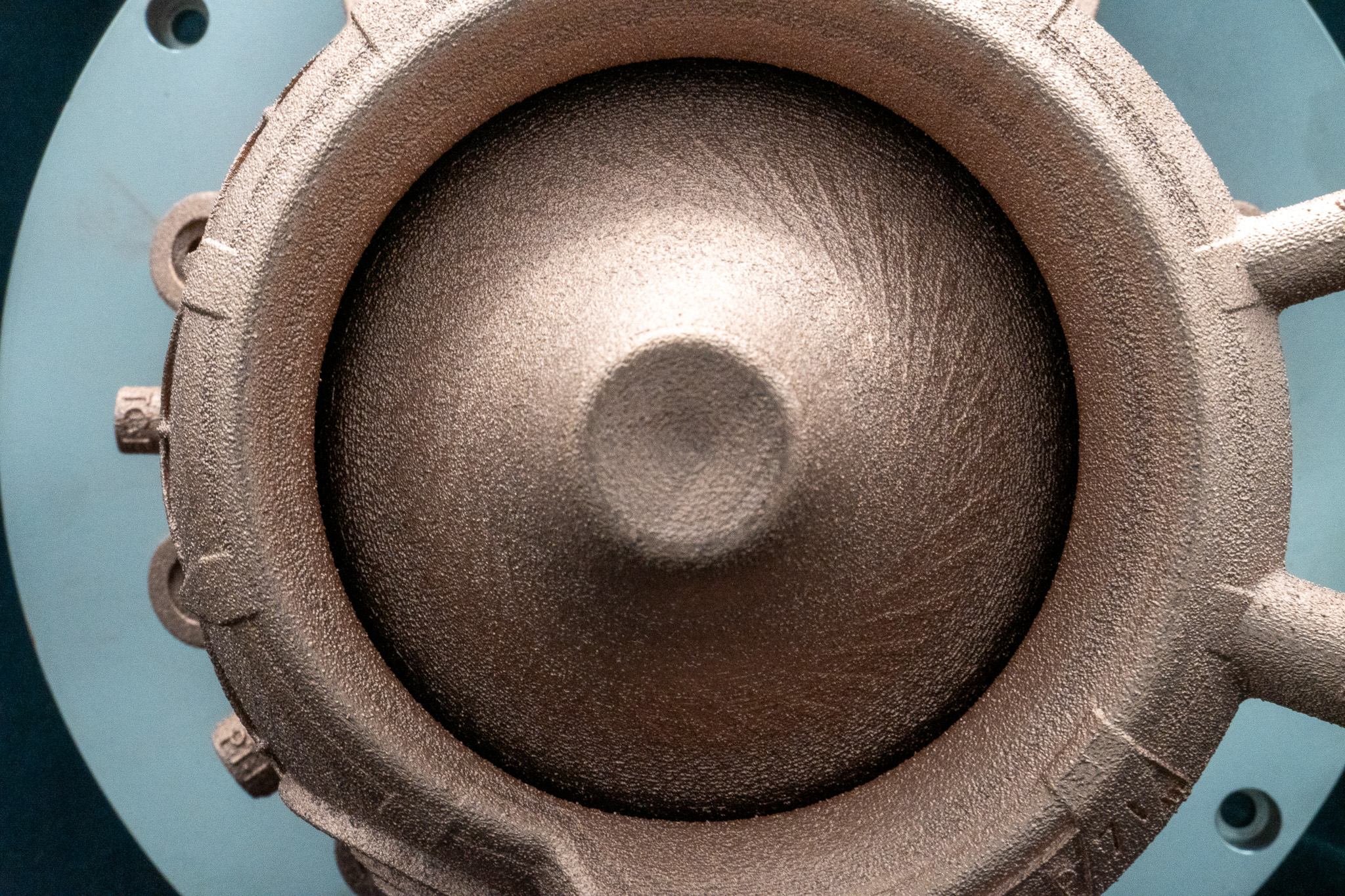
What happens when computational engineering meets industrial additive manufacturing? The YouTube video “This rocket engine was not designed by humans” provides an impressive answer. At its center is an aerospike engine that was not conventionally engineered, but digitally developed by LEAP 71 using the AI-powered platform Noyron. The component was manufactured by Aconity3D using the Laser Powder Bed Fusion (LPBF) process as a monolithic metal part made from the copper alloy CuCrZr.
Why this component is particularly challenging
The aerospike design places the highest demands on the manufacturing process: regenerative cooling channels inside, large overhangs, functionally integrated structures, and tight tolerances for surface quality. This is precisely where Aconity3D’s expertise becomes evident. Through targeted optimization of scan strategies and process parameters, the component was realized in the required quality—despite its geometric and material complexity. The entire printing process took only a few days.
Aconity3D as a manufacturing partner in the project context
LEAP 71 was responsible in this project for the digital design of the engine as well as the overall coordination of all participating partners. Aconity3D handled the additive manufacturing of the metal component.
Additional partners complemented the process chain: Solukon for powder removal, Fraunhofer ILT for heat treatment, and the Race 2 Space Team from the University of Sheffield for test preparation and on-site support.
The result is a strong example of collaboration across the entire value chain—from the digital model to the tested component.
Relevance for industry and research
This project highlights the potential of additive manufacturing when geometry, material, and application allow no compromises. For decision-makers and developers in aerospace, energy technology, or mechanical engineering, the video provides concrete insight into the possibilities of modern metal manufacturing with LPBF.
Your next project with Aconity3D
Are you working on complex components, demanding materials, or functionally integrated geometries? Aconity3D offers the process expertise and system technology to turn your requirements into reality. Get in touch—we look forward to the exchange.